

“>
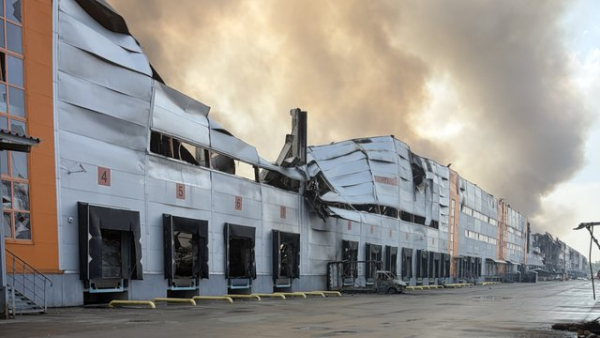
Photo: Press service of RAU
The concept of implementing a modest charge on purchases within retail establishments, intended for a dedicated insurance fund to cover losses incurred by retail chains due to shelling, was deliberated during an emergency meeting on August 5th involving Prime Minister Denys Shmyhal and businesses affected by the recent large-scale enemy attack on warehouses.
As disclosed to Interfax-Ukraine by a meeting participant, the proposal involves a minor percentage added to each transaction in trading networks.
“A distinct avenue is war risk insurance. We anticipate support from international partners in developing effective mechanisms,” Shmyhal stated in a Telegram post following the meeting.
The notion of establishing a similar industry-specific insurance fund has been under discussion by gas station networks for some time, as enemy attacks, particularly in frontline regions, have escalated significantly since late spring. Representatives from two major networks and one insurance company informed the agency that this matter was on the agenda for meetings at the Ministry of Economy and Environmental Protection, with insurers already involved in these deliberations.
According to the Interfax-Ukraine interlocutor, a relatively new proposition at the meeting with the prime minister, who is well-acquainted with this issue from his tenure leading Naftogaz of Ukraine and its subsidiary Ukrnafta, was to involve international partners in this fund, enabling them to contribute proportionally alongside Ukrainian businesses.
As previously reported by Interfax-Ukraine, the fundamental idea of distributing the insurance burden uniformly across businesses nationwide formed the basis of the draft law “On the System of War Risk Insurance.” This was developed by the National Bank with the Ministry of Economy and submitted to the Verkhovna Rada by MPs in late 2024. However, this draft law did not pass the relevant committee, with developers emerging as its primary opponents.
“It (draft law No. 12372 ‘On the System of War Risk Insurance’ – IF-U) did not pass because it is not needed. War risk insurance is already in effect,” commented Danylo Hetmantsev, head of the parliamentary committee on finance, tax, and customs policy, in an interview with Interfax-Ukraine in mid-June, urging businesses to participate more actively in the new state program for war risk insurance.
Currently, state support operates through two channels: insurance via PrJSC Export Credit Agency (ECA) with preferential rates for frontline territories, and compensation for the excess insurance premium costs for companies exceeding 1% when insuring war risks. However, large businesses have previously criticized these programs for significant limitations on insurance payouts. For ECA, this is up to UAH 200 million per facility with a tariff rate of up to 4.05% for investment loans and 8.05% for direct investments. For insurance premium compensation, it’s up to UAH 30 million with a maximum compensation sum of UAH 3 million.
The consequences of recent Russian ballistic missile attacks on large warehouses highlight the critical inadequacy of these sums. For instance, the owner of the Winetime chain of stores, Asnova Holding, preliminarily estimated the losses of goods inventory at UAH 300 million following the destruction of the main product warehouse near Kyiv by ballistic missiles on the night of July 18-19.
“We have incurred very substantial losses – amounting to billions of hryvnias,” stated Vladislav Chechetkin, co-owner of the largest Ukrainian retailer Rozetka, on August 5th, referring to the aftermath of the company’s completely destroyed distribution complex during the night.
The discussion about making war risk insurance mandatory for all businesses, subsidized by international partners by approximately 50-70%, was initiated on Facebook on August 5th by Hlib Vyshlinsky, head of the Center for Economic Strategy.
In his view, this would partially address the challenges faced by those in areas vulnerable to ballistic missiles or even guided aerial bombs but who need to continue operations, thereby leveling the geographical business risks across different regions.
Yevhen Zaigraev, a member of the board of PrivatBank responsible for corporate business and SMEs, supported the rationale behind such a measure during the discussion.
“This is an operational international practice of risk pooling, and we are working on such a solution. A year ago, the NBU and we submitted a draft law on war risk insurance with a similar logic, but it did not pass the Verkhovna Rada Committee at the time due to several factors, including the business community’s perception of mandatory insurance as an additional tax,” commented Andriy Terekh, former Deputy Minister of Economy and a member of the supervisory boards of state entities such as ECA, the Entrepreneurship Development Fund (EDF, managing the ‘5-7-9’ preferential loan program), and PrJSC Ukrainian Financial Housing Company (Ukrfinzhytlo, managing the ‘єОселя’ mortgage program).
In his opinion, this idea requires proactive advocacy in collaboration with the business sector.
The primary counterarguments raised during the discussion included the assertion that such mandatory insurance would represent a significant additional tax and subsidization of one business at the expense of another. Furthermore, the extremely high current insurance rates were also highlighted.
“So, basically, another substantial tax on businesses. Where does this person’s hatred for business come from?” wrote Oleksandr Paraschiy, head of the analytical department at Concorde Capital investment company.
“From the last meeting of the Ministry of Economy with businesses on this topic, it appeared that the problem is not just about money/subsidies but a high concentration of risks. In Kyiv, nothing is insured, not even at exorbitant rates of 10-12%… At the same meeting, they mentioned rejections for insurance in Dnipro, Chernihiv, and other cities,” noted Olena Bilan, director of the analytical department and chief economist at Dragon Capital, a major player in the Ukrainian real estate market.
“And in frontline regions, commercial insurance is non-existent, so as long as hostilities persist, it’s essentially a conditional ‘quasi-insurance,’ as implemented now through ECA,” believes Terekh.
As reported, Russia launched its largest ballistic missile attack of the war on August 5th, targeting logistics and distribution facilities near Kyiv. Leaders in their respective sectors, including the marketplace Rozetka, Nova Poshta, retail chains Epicenter, Fozzy, and Novus, as well as suppliers of car chemicals LIQUI MOLY, automotive parts Toyota-Ukraine and Bosch Ukraine, and apparel and footwear retailers Intertop and Puma, announced the destruction of their facilities.
The previous day, the enemy struck Dnipro, after which the largest Ukrainian manufacturer of household goods, Biosfera, the leading player in the ice cream market, Lasunka, and the chocolate producer Millennium reported the destruction of their warehouses on social media.
Following the August 5th enemy shelling, Prime Minister Shmyhal announced that the government would organize meetings with businesses to ensure the uninterrupted operation of logistics and trading companies. According to him, the Ministry of Economy and Environmental Protection received relevant instructions.
Based on these directives, he stated that a separate meeting is planned in the near future with the leadership of the National Bank of Ukraine, the banking sector, and relevant ministries concerning credit support mechanisms for businesses.
Furthermore, Shmyhal noted that the government is preparing decisions on the decentralization of international logistics and the expansion of the customs corridor, and the state is prepared to grant businesses priority access to available premises for dispersing warehouse capacities. The Prime Minister instructed the Ministry of Economy, ARMA, and the State Property Fund to prepare a list of such facilities within three days.